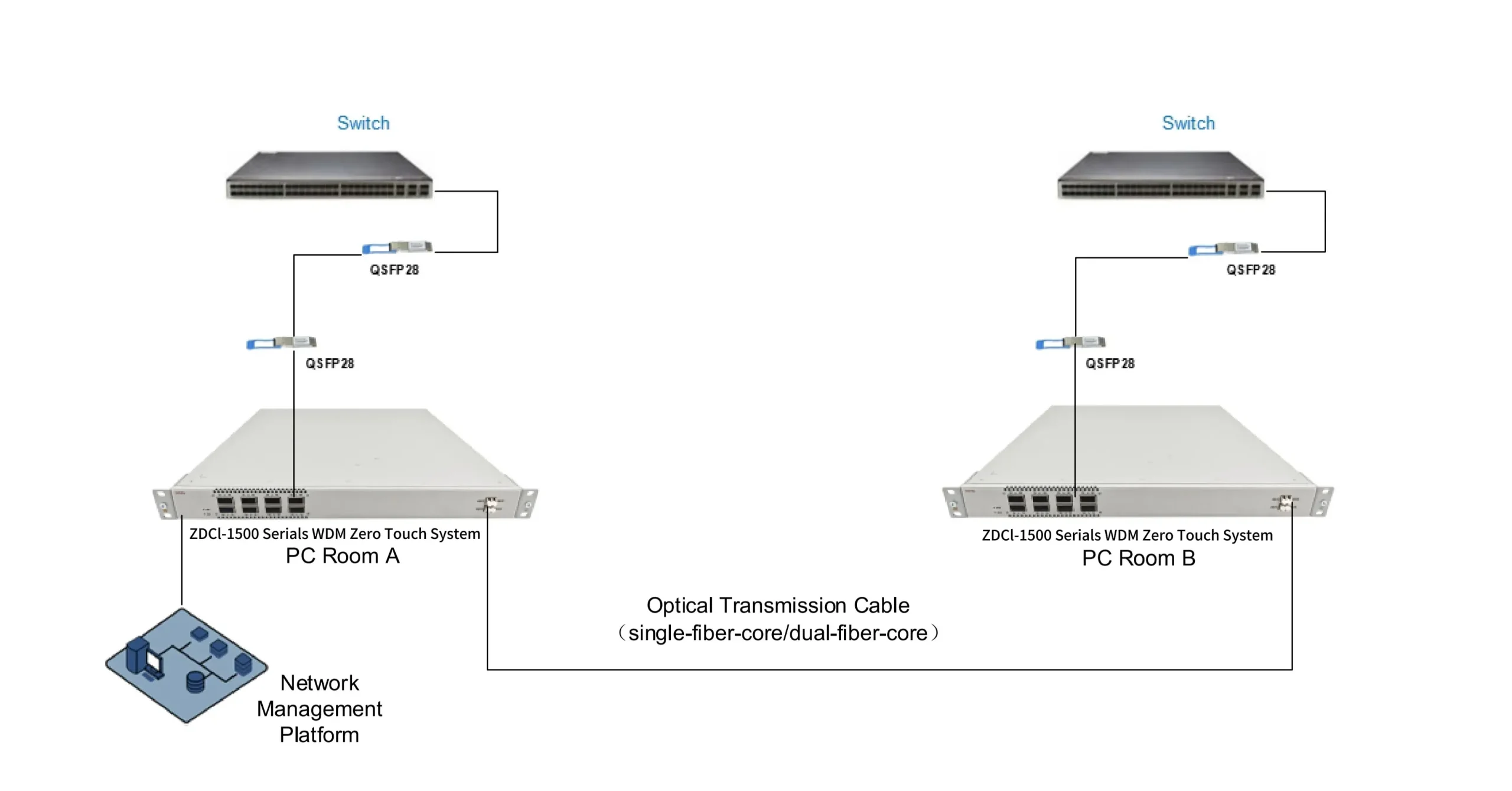
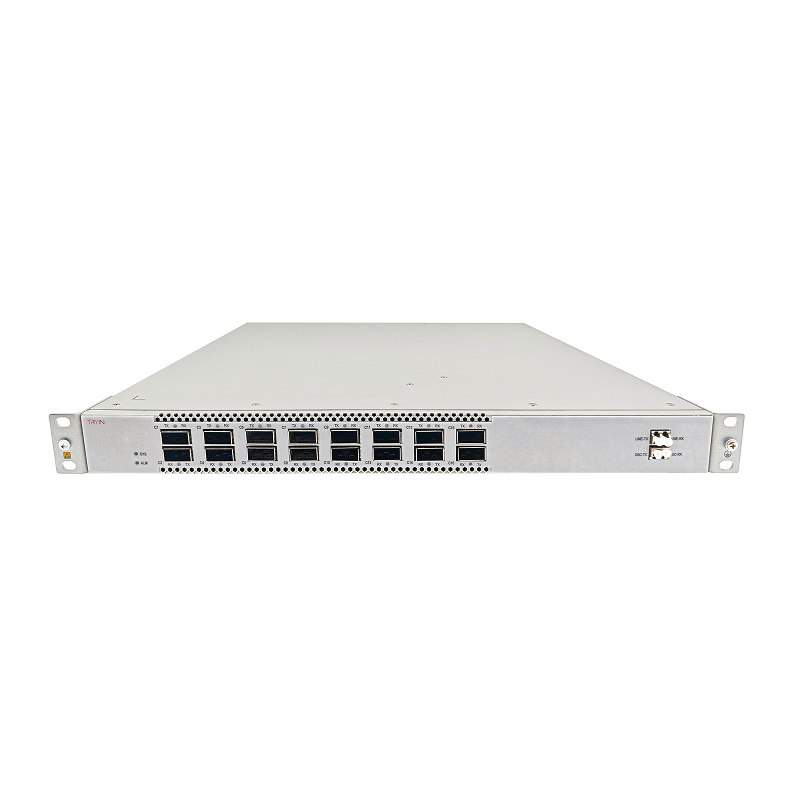
Tryin, designed for cloud service providers, internet companies, and large-scale enterprises operating high-density data centers, delivers an ultra-high-capacity, ultra-low-latency optical interconnection solution.
Based on a Whitebox DWDM architecture, the solution enables geographically distributed data centers to operate as if they were locally interconnected. All devices support zero-touch provisioning and intelligent optimization upon power-up, eliminating the need for on-site expert commissioning. Deployment and configuration can be completed remotely via a Web-based interface, significantly reducing the complexity and delivery cycle of cross-region data center interconnection.
Customer Challenges
Slow deployment and expert dependency
Traditional DWDM systems require complex configuration and several days of on-site tuning by specialists, delaying service launch
Heavy O&M burden
Multi-data-center operations require 24×7 expert teams, resulting in high labor costs
Difficult capacity expansion
Rapid traffic growth drives bandwidth demand, while limited fiber resources make expansion costly
High power consumption pressure
Energy costs account for a large share of data center OPEX, and equipment power usage directly impacts profitability
Advantages
Plug-and-play, service activation in minutes: Devices automatically complete configuration and link optimization after power-on, allowing non-specialists to deploy services and reducing go-live time from days to hours
Intelligent O&M with remote management: Web-based intelligent management combined with Tryin’s world-class support team enables unified cross-region operations, reducing O&M labor costs by over 50%
Easy scalability with stacking expansion support: Supports stackable expansion, enabling straightforward capacity growth with minimal operational complexity
High reliability assurance: Carrier-grade design with redundancy protection mechanisms ensures uninterrupted operation of mission-critical services